Queue Management System in Pakistan: 7 Signs You Need One
If your lobby feels like a bottleneck every afternoon, a queue management system in Pakistan may be the upgrade your business has been missing. From Karachi banks to Lahore hospitals and Islamabad service centres, organised digital queuing has moved from a luxury to a baseline expectation in 2026. This article lays out the seven clear signals that it is time to invest, and how to compare options across the region.
Rather than a generic sales pitch, think of this as a diagnostic checklist. Read each sign honestly against your own operation. If three or more apply, the payback period is likely shorter than you expect.
What a Queue Management System in Pakistan Actually Does
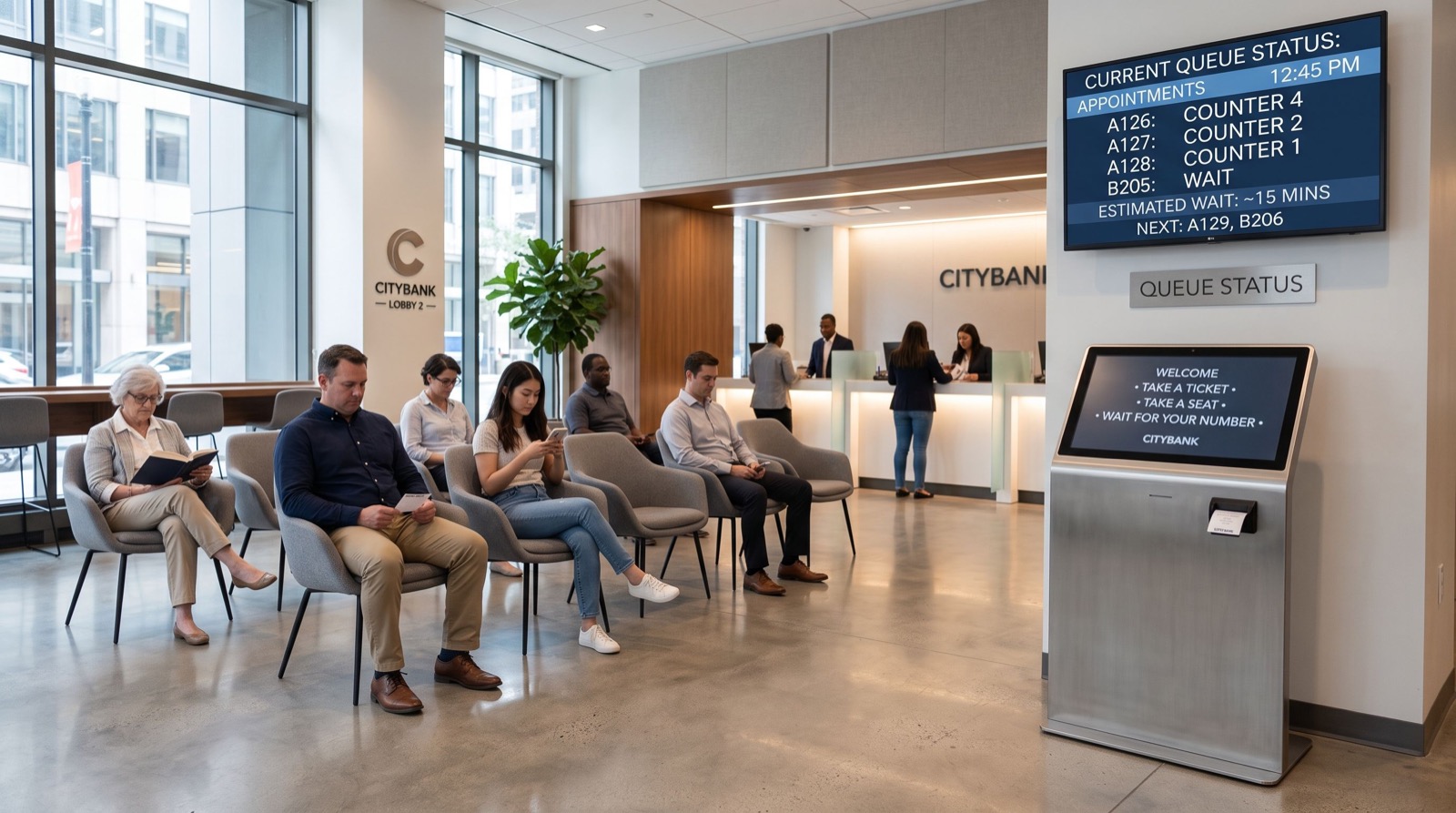
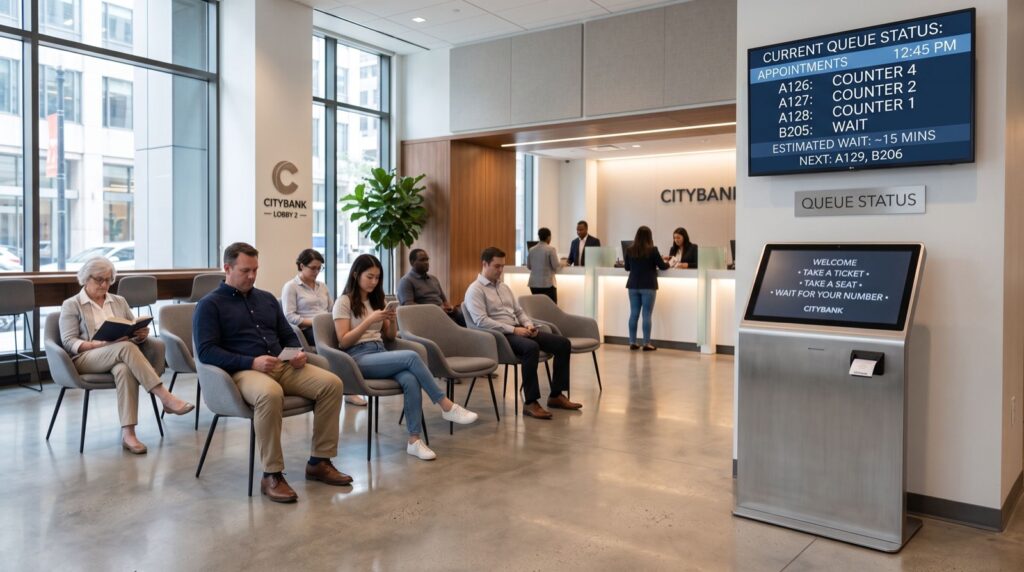
At its heart, the platform captures a visitor at arrival, assigns a ticket, and routes them to the right counter while keeping them informed. The technology spans self-service kiosks, mobile check-in, digital displays, and a manager dashboard that records every interaction.
The result is a fair, first-come-first-served flow that removes crowding and arguments at the counter. Staff serve calmly, and customers relax because they can see their place in line.
The 7 Signs Your Business Is Ready
Use this list as a quick audit. Each sign points to a measurable cost you are already paying without realising it.
- Visitors complain about waiting more than once a week.
- Staff cannot explain why some counters are idle while others are swamped.
- You have no data on average wait or service time.
- Peak-hour crowds block entrances and create safety concerns.
- Walk-outs happen before customers reach a counter.
- Appointments and walk-ins clash with no clear priority rule.
- You are expanding to new branches and need consistent service standards.
Which Sectors Benefit Most?
Banks, telecom franchises, passport and NADRA-style service centres, hospitals, and universities see the fastest returns. Any place where many people need a limited number of counters is a strong candidate.
How Does Digital Queuing Compare to Paper Tokens?
Many Pakistani offices still rely on hand-torn paper tokens and a shouted number. That approach fails the moment volume rises, because it offers no data, no fairness controls, and no visibility for the customer.
The comparison below highlights why the shift to a digital platform is worth the modest investment.
| Feature | Paper Tokens | Digital Queue System |
|---|---|---|
| Real-time status | None | Live screens and SMS |
| Wait-time reporting | Manual guesswork | Automatic analytics |
| Counter routing | Fixed line | Smart, balanced |
| Appointment support | Not possible | Built in |
| Multi-branch view | None | Central dashboard |
Choosing a Regional Provider
Pakistan-based teams increasingly buy from vendors who also serve the Gulf, because those suppliers bring proven scale and bilingual interfaces. A vendor that can deploy a queue management system in saudi arabia usually has the engineering depth to support a demanding, high-volume Pakistani rollout too.
When you evaluate a local queue management system in pakistan, insist on Urdu and English displays, local SIM-based SMS support, and after-sales service within your city. For related logistics and relocation planning, our network of reliable local experts can help coordinate multi-site expansions.
Questions to Ask Before You Sign
- Is the dashboard cloud-based so head office can watch every branch?
- Does pricing include installation, training, and a warranty?
- Can the system integrate with your CRM or core banking software?
- What is the guaranteed response time for on-site support?
The Business Case in 2026
Customer patience keeps shrinking as mobile-first habits spread. Research from the U.S. Federal Reserve’s payments studies shows consumers increasingly expect fast, self-service transactions; you can review the trend in the official Federal Reserve payment systems resources. The same expectation now shapes how Pakistani customers judge a bank or clinic visit.
Practical tip from the field: pilot your system during the busiest week of the month, not the quietest. You will surface real bottlenecks and win faster internal buy-in when the before-and-after numbers are dramatic rather than marginal.
Rollout Roadmap for a First-Time Buyer
Many Pakistani businesses stall because they try to do everything at once. A phased roadmap keeps costs predictable and builds internal confidence with quick, visible wins.
Phase 1: Discovery
Spend one week observing your busiest branch. Record arrival patterns, average service time, and the top three complaints staff hear. This baseline makes your later results easy to prove.
Phase 2: Pilot
Install a single kiosk, two displays, and the dashboard at one site. Run it for a month, gather feedback from both staff and customers, and fine-tune the routing rules before spending more.
Phase 3: Scale
Once the pilot shows shorter waits and calmer counters, replicate the exact configuration across branches. A central dashboard then lets head office compare sites and share best practice quickly.
Common Mistakes and How to Avoid Them
Learning from others’ errors saves both money and reputation. These are the pitfalls we see most often in the local market.
- Buying on price alone: the cheapest kiosk often lacks the durability a high-traffic Pakistani branch demands.
- Ignoring staff training: a powerful dashboard is useless if agents never learn to read it.
- Skipping the pilot: city-wide rollouts without a test site almost always overrun on time and budget.
- No local support: a vendor without an in-city engineer leaves you stranded when hardware fails.
Avoid these traps and your project will land on time, on budget, and with the wait-time gains you promised your leadership team.
Frequently Asked Questions
How much does a queue management system in Pakistan cost?
Entry-level single-branch setups are affordable for most SMEs, while multi-branch networks with central dashboards cost more. Ask for a quote based on your counter count and site number for an accurate figure.
Does it work without reliable internet?
Good platforms run locally on the branch network and sync to the cloud when connectivity returns, so a brief outage never stops customers from being served.
Can it send SMS alerts on local networks?
Yes. Leading systems integrate with local SMS gateways so customers can step away and return when their turn approaches, which reduces lobby crowding significantly.
How quickly will staff adapt?
Counter agents typically master the interface within a single training session, because calling the next ticket and viewing the queue takes only a few clicks.
Conclusion
If several of the seven signs describe your lobby, a queue management system in Pakistan will likely pay for itself within months through happier customers and calmer staff. Start with one high-traffic branch, measure the results, and scale from there. Book a demo this week and see your own wait-time data before you commit.